Human Circulatory System: Complete Guide
Explore the structure and function of the human circulatory system in this comprehensive course. From the heart and blood vessels to the mechanisms of blood flow, gain essential knowledge through clear explanations and interactive lessons. Perfect for students, educators, and anyone interested in human biology.

Overview
Course Overview
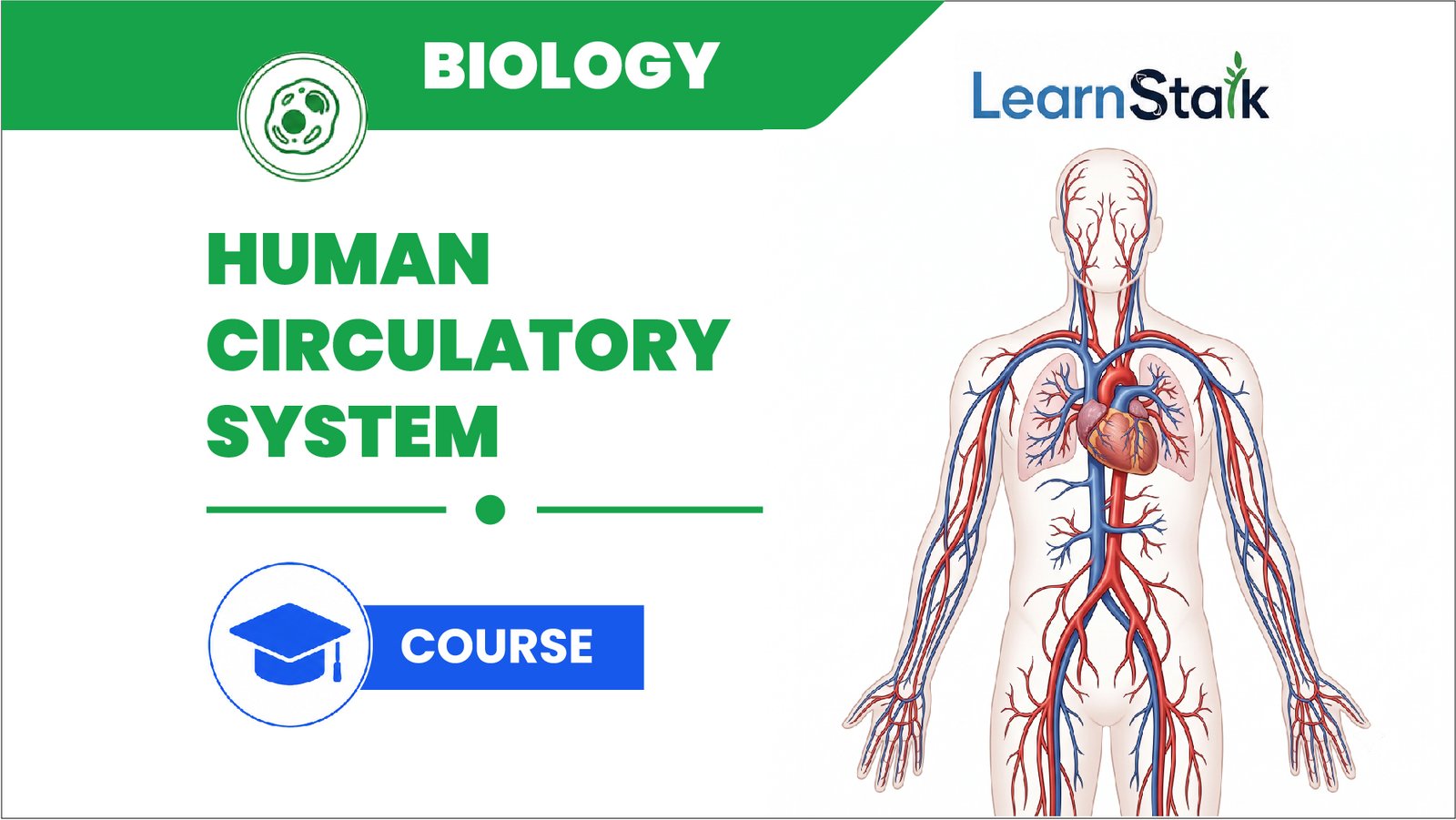
The Human Circulatory System: Complete Guide course gives learners a clear, exam-focused mastery of how blood and the circulatory system protect the body and maintain life—covering blood composition, blood vessels, single vs double circulation, open vs closed systems, heart structure, the cardiac cycle, coronary heart disease, and tissue fluid/lymph with immune function.
Instead of memorising isolated facts, this course trains you to think like an examiner: define key terms, explain processes step-by-step, interpret scenarios, and score marks using correct biological language. Using structured explanations aligned to IGCSE and O Level Biology, real-world medical examples, exam tips, mnemonics, interactive activities, and high-quality LearnStalk explainer videos, learners will develop deep understanding, fast recall, and confidence in structured questions.
What You Will Learn
- Master blood composition and link each component to its function using correct exam terminology
- Compare arteries, veins, and capillaries with structure-function precision
- Explain single vs double circulation and why humans require efficiency
- Understand heart structure and blood flow pathways with diagram accuracy
- Break down the cardiac cycle step-by-step for exam questions
- Analyse coronary heart disease with causes, effects, and prevention
- Explain tissue fluid and lymphatic system and their role in immunity
Why This Course Matters
Many students lose marks not because the topic is difficult, but because their answers lack precision. They confuse blood flow, misuse terminology, or forget key biological processes. Human Circulatory System: Complete Guide solves this by teaching the topic as a connected system—how each structure links to function, and how examiners award marks. The result is clarity, accuracy, and high-scoring answers.
Course Features
- LearnStalk explainer videos aligned to exam standards
- Interactive quizzes and activities for active recall
- Step-by-step concept breakdowns with exam phrasing
- Exam tips, mnemonics, and common mistakes
- Audio recaps for fast revision
- Flashcards for memory reinforcement
- Discussion support for collaborative learning
- Real-world scenarios for deeper understanding
What You Get
- Full access to all lessons and videos
- Structured learning system aligned to exams
- Practice quizzes and revision tools
- Downloadable/interactive learning resources
- Certificate of completion after finishing the course
- Points and badges as you progress through the course
Who This Course Is For
- IGCSE and O Level students seeking clear structured mastery
- Learners preparing for exams who want mark-winning answers
- Students struggling with diagrams and processes who need simple logical explanations
- Anyone aiming for higher grades and confidence in biology
Format & Access
Lifetime access to the course after purchase. Learn at your own pace with structured lessons, videos, and practice tools available anytime.
Customer Guarantee
If you don’t find value, contact us and we’ll make it right.
FAQs
- How do I access the course? You will get instant access after purchase inside your LearnStalk account.
- How long do I have access? Lifetime access—learn anytime at your own pace.
- Is this course beginner-friendly? Yes, it is designed for both beginners and exam-focused learners.
- Refunds? 7-day refund policy—see refund page for details or contact support.
Course Price
$12.99 — Full Access
Curriculum
Curriculum
- 1 Section
- 9 Lessons
- 4 Hours
- Human Circulatory System9 Items
- 1.1Lesson 1: Composition of Blood
- 1.2Lesson 2: Types of Blood Vessels
- 1.3Lesson 3: Open vs Closed Circulatory System
- 1.4Lesson 4: Single vs Double Circulatory System
- 1.5Lesson 5: Structure of the Heart
- 1.6Lesson 6: How the Heart Works (Cardiac Cycle)
- 1.7Lesson 7: Coronary Heart Disease
- 1.8Lesson 8: Tissue Fluid and Lymph
- 1.9Lesson 9: Immune Functions of Lymphatic System
You May Like
Subatomic Constructor Lab
The Subatomic Constructor Lab transforms atomic theory from abstract diagrams into an interactive, hands-on building experience. By dragging protons, neutrons, and electrons into their correct...
Radical Compounds Formula Constructor
The Formula Constructor lab turns the challenging topic of writing ionic formulas with radicals into an interactive, logical process. Instead of memorising lists, you drag...
Particle Phase Simulator
The Particle Phase Simulator is an interactive virtual laboratory that brings the particle model of matter to life. By controlling heat input and observing real-time...
Acceleration Explorer
Acceleration Explorer — Motion Lab is an interactive virtual physics lab that transforms abstract acceleration concepts into real-time, visual learning. Designed for IGCSE/O Level students...
Characteristics of Life Lab
Is Fire Alive? — Virtual Lab. Fire moves, it grows, it consumes fuel, and it produces waste. At first glance, it seems to share some...
Course Features
- Lectures 9
- Quiz 0
- Duration 4 hours
- Skill level All levels
- Language English
- Students 209
- Certificate No
- Assessments Yes
“This course provides a thorough and engaging overview of the human circulatory system. The lessons are well-structured, easy to follow, and packed with practical examples. Highly recommended for students and educators seeking a deep understanding of cardiovascular health and function.”