
Overview
Course Overview
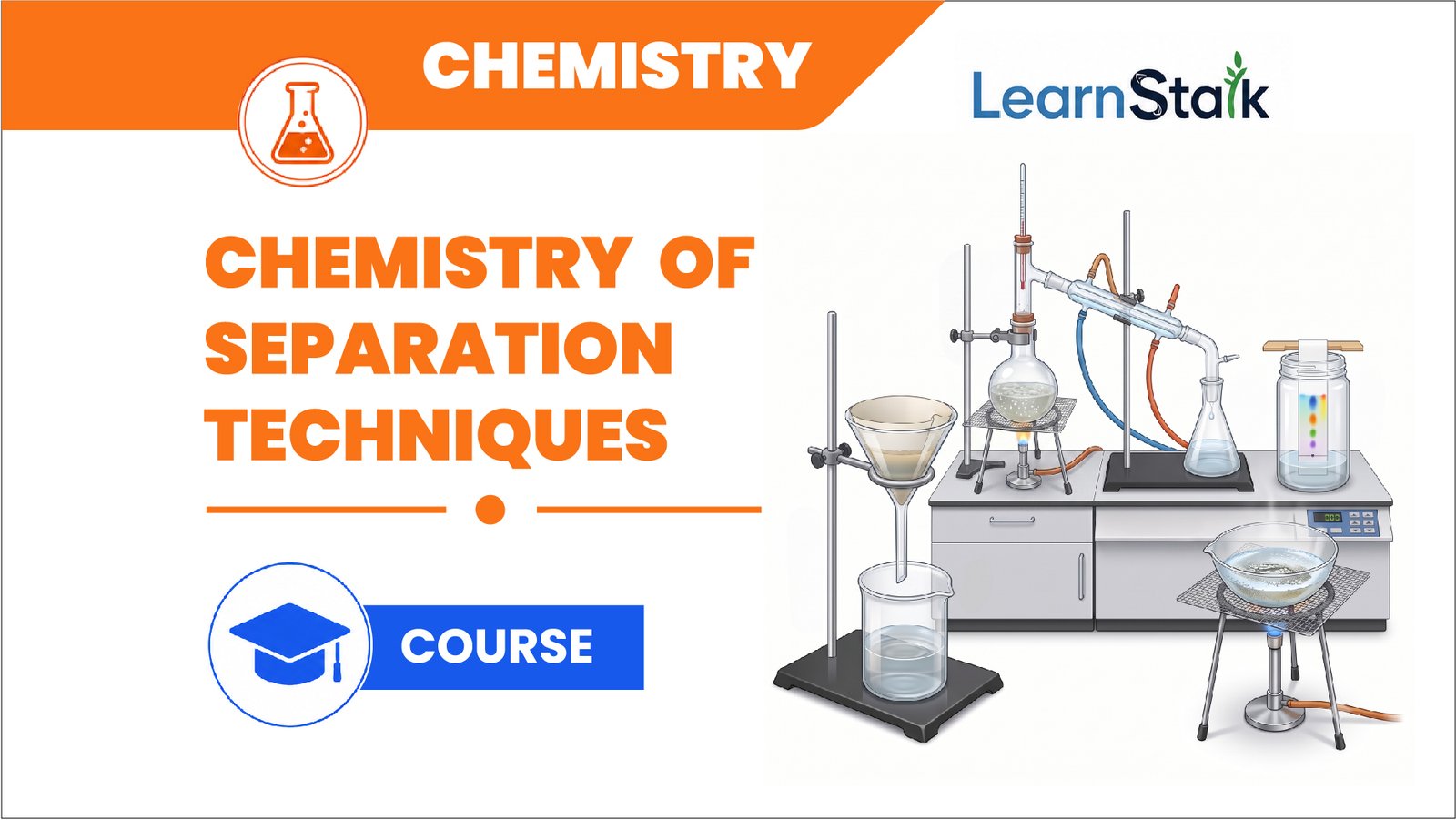
The Chemistry of Separation Techniques (Practical Lab Course) gives learners a clear, exam-focused mastery of the most tested separation methods in IGCSE and O Level Chemistry—including filtration, evaporation, crystallization, simple distillation, fractional distillation, separating funnel, and paper chromatography. This course is built for students who want strong practical understanding, correct scientific vocabulary, and the ability to answer both structured theory questions and practical/experimental questions with confidence.
Using step-by-step lab explanations, multiple exam-style examples, safety and accuracy tips, interactive quizzes, and high-quality LearnStalk explainer videos, learners will build fast recall, method selection skills, and mark-scheme-ready answers. Whether you are revising for finals, preparing for mocks, or strengthening your practical skills, this course guides you from core principles to full exam readiness.
What You Will Learn
- Choose the correct separation technique by identifying mixture types: solid + liquid, liquid + liquid, soluble + insoluble solids, or mixtures of dyes.
- Perform and explain filtration using correct lab terminology and setup.
- Use evaporation and crystallization to recover and purify solids effectively.
- Apply simple and fractional distillation based on boiling point differences.
- Separate immiscible liquids using a separating funnel with correct reasoning.
- Interpret chromatography and calculate Rf values using exam-standard language.
Why This Course Matters
Many learners lose easy marks because they memorize techniques without understanding when to use them, how they work, and how to explain them in exams. This course trains you to think like an examiner—so your answers become structured, precise, and high-scoring using correct scientific keywords and reasoning.
Course Features
- LearnStalk explainer videos aligned to exam requirements
- Interactive quizzes & exam-style MCQs
- Step-by-step practical breakdowns (apparatus, method, precautions)
- Audio recaps & flashcards for fast revision
- Exam tips & common mistakes
- Discussion support for deeper understanding
What You Get
- Full lifetime access to the complete course
- Structured video lessons with clear explanations
- Downloadable learning tools (flashcards, summaries, recaps)
- Interactive quizzes and practice activities
- Certificate of completion after finishing the course
- Earn points and achievement badges as you progress
Who This Course Is For
- IGCSE and O Level students aiming for strong exam performance
- Learners who struggle with choosing the correct separation method
- Students preparing for mocks, finals, or practical exams
- Anyone wanting clear, structured revision with practice
Format & Access
This is a fully online course with instant access after purchase. Learn at your own pace with lifetime access across all devices.
Customer Guarantee
FAQs
- How do I access the course? You get instant access after purchase through your LearnStalk account.
- How long do I have access? Lifetime access—learn anytime at your own pace.
- Refund policy? 7-day refund available. Contact support if needed.
Course Price
$12.99 — Full Access
Curriculum
Curriculum
- 1 Section
- 7 Lessons
- 4 Hours
You May Like
Subatomic Constructor Lab
The Subatomic Constructor Lab transforms atomic theory from abstract diagrams into an interactive, hands-on building experience. By dragging protons, neutrons, and electrons into their correct...
Radical Compounds Formula Constructor
The Formula Constructor lab turns the challenging topic of writing ionic formulas with radicals into an interactive, logical process. Instead of memorising lists, you drag...
Particle Phase Simulator
The Particle Phase Simulator is an interactive virtual laboratory that brings the particle model of matter to life. By controlling heat input and observing real-time...
Acceleration Explorer
Acceleration Explorer — Motion Lab is an interactive virtual physics lab that transforms abstract acceleration concepts into real-time, visual learning. Designed for IGCSE/O Level students...
Compounds vs Mistures Lab
Compounds vs Mixtures — Particle Workshop is an immersive virtual lab where you become the particle architect. Drag real atoms into a reaction chamber, form...
Course Features
- Lectures 7
- Quiz 0
- Duration 4 hours
- Skill level All levels
- Language English
- Students 171
- Certificate No
- Assessments Yes
“This course offers an outstanding hands-on approach to mastering separation techniques in chemistry. The practical labs and clear explanations make complex processes easy to understand and apply in real-world scenarios. Highly recommended for students and professionals seeking practical expertise.”