

Overview
Course Overview
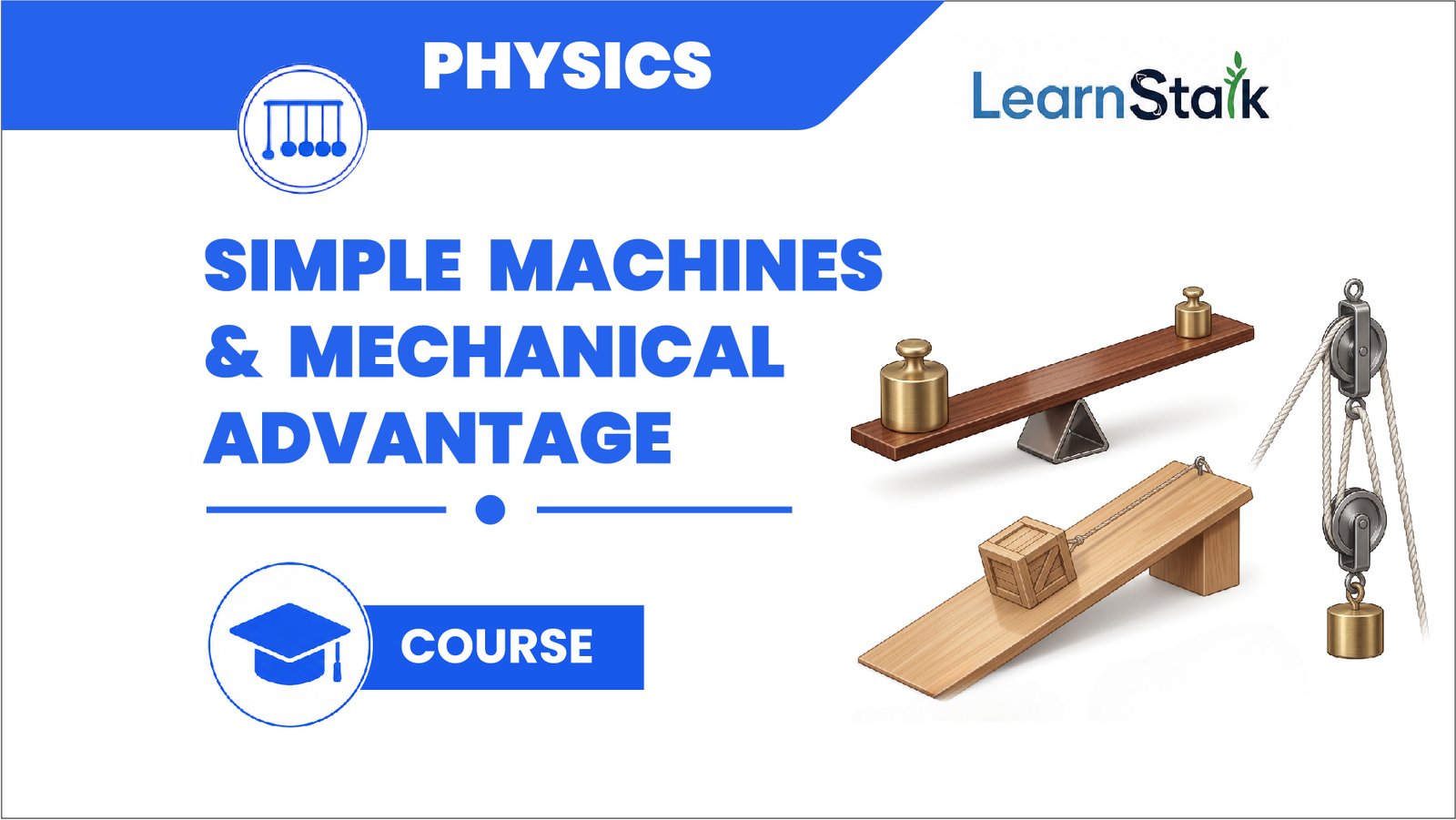
The Simple Machines & Mechanical Advantage (Applied Physics) course gives learners a clear, exam-focused mastery of how common machines make work easier using the core ideas of force, distance, work, mechanical advantage (MA), velocity ratio (VR), and efficiency. Built for IGCSE and O Level Physics, this course helps you identify the six simple machines in real life and solve standard exam calculations with confidence and accuracy.
Using structured explanations, multiple worked examples, exam tips, mnemonics, interactive quizzes, and high-quality LearnStalk explainer videos, learners will build fast recall, strong application skills, and mark-scheme-ready answers. Whether you’re revising for finals, preparing for mocks, or strengthening your mechanics foundation for advanced physics, this course guides you step by step from concept clarity to exam performance.
What You Will Learn
- Identify and describe the six simple machines—lever, inclined plane, pulley, wheel and axle, screw, and wedge.
- Use correct exam terms: effort and load.
- Calculate Mechanical Advantage (MA) and interpret results.
- Calculate Velocity Ratio (VR) and understand force–distance trade-offs.
- Calculate Efficiency using both standard formulas.
- Explain energy losses (friction, heat, sound).
- Apply concepts to real-life and exam scenarios.
- Solve exam problems using a repeatable step-by-step method.
Why This Course Matters
Many learners lose marks because they memorize formulas without understanding. This course builds a connected mechanics system—so you understand how machines trade force for distance, apply correct formulas, and write answers that match exam marking schemes.
Course Features
- LearnStalk explainer videos aligned to exam requirements
- Interactive quizzes & exam-style questions
- Worked examples with clear step-by-step solutions
- Audio recaps for fast revision
- Flashcards for formulas and definitions
- Exam tips and common mistake breakdowns
- Discussion prompts to strengthen understanding
What You Get
- Full lifetime access to the complete course
- All lesson videos, quizzes, and learning materials
- Certificate of completion after finishing the course
- Access across mobile, tablet, and desktop
- Earn points and badges as you progress
Who This Course Is For
- IGCSE and O Level students aiming for strong exam performance
- Learners struggling with MA, VR, and efficiency calculations
- Students who want structured, revision-friendly learning
- Anyone building a solid foundation in mechanics
Format & Access
Instant access after purchase. Learn at your own pace with structured lessons, quizzes, and revision tools. Accessible on all devices.
Customer Guarantee
If you don’t find value, contact us and we’ll make it right.
FAQs
- How do I access the course? You get instant access after purchase through your LearnStalk account.
- Is this aligned with exams? Yes, the course is structured for IGCSE and O Level Physics.
- Do I get a certificate? Yes, a certificate is awarded after completing the course.
- Refund policy? 7-day refund available. See refund policy page for details.
Course Price
$12.99 — Full Access
Curriculum
- 1 Section
- 6 Lessons
- 3 Hours
You May Like
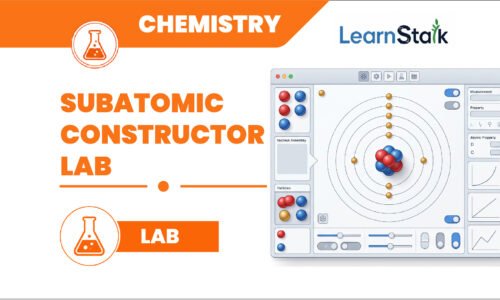
Subatomic Constructor Lab
The Subatomic Constructor Lab transforms atomic theory from abstract diagrams into an interactive, hands-on building experience. By dragging protons, neutrons, and electrons into their correct...
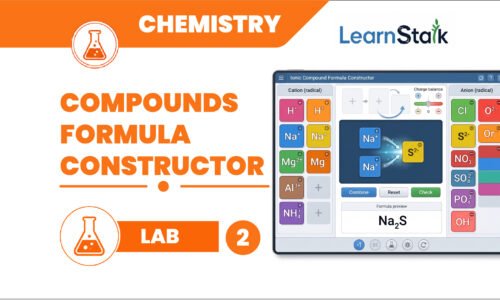
Radical Compounds Formula Constructor
The Formula Constructor lab turns the challenging topic of writing ionic formulas with radicals into an interactive, logical process. Instead of memorising lists, you drag...
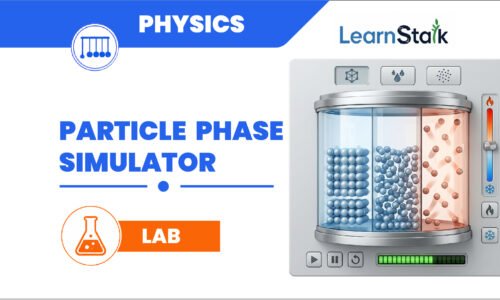
Particle Phase Simulator
The Particle Phase Simulator is an interactive virtual laboratory that brings the particle model of matter to life. By controlling heat input and observing real-time...
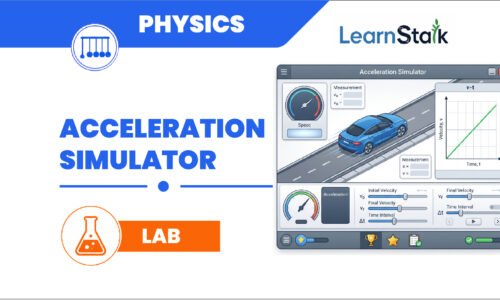
Acceleration Explorer
Acceleration Explorer — Motion Lab is an interactive virtual physics lab that transforms abstract acceleration concepts into real-time, visual learning. Designed for IGCSE/O Level students...
Circular Motion Simulator
Orbit & Spin — The Circular Motion Lab is an interactive simulation that transforms abstract physics concepts into a hands-on learning experience. Adjust speed, radius,...
Course Features
- Lectures 6
- Quiz 0
- Duration 3 hours
- Skill level Beginner
- Language English
- Students 71
- Certificate No
- Assessments Yes
"This course made simple machines and mechanical advantage easy to grasp. The practical examples and clear explanations helped me apply physics concepts confidently in real-life situations!"