

Overview
Course Overview
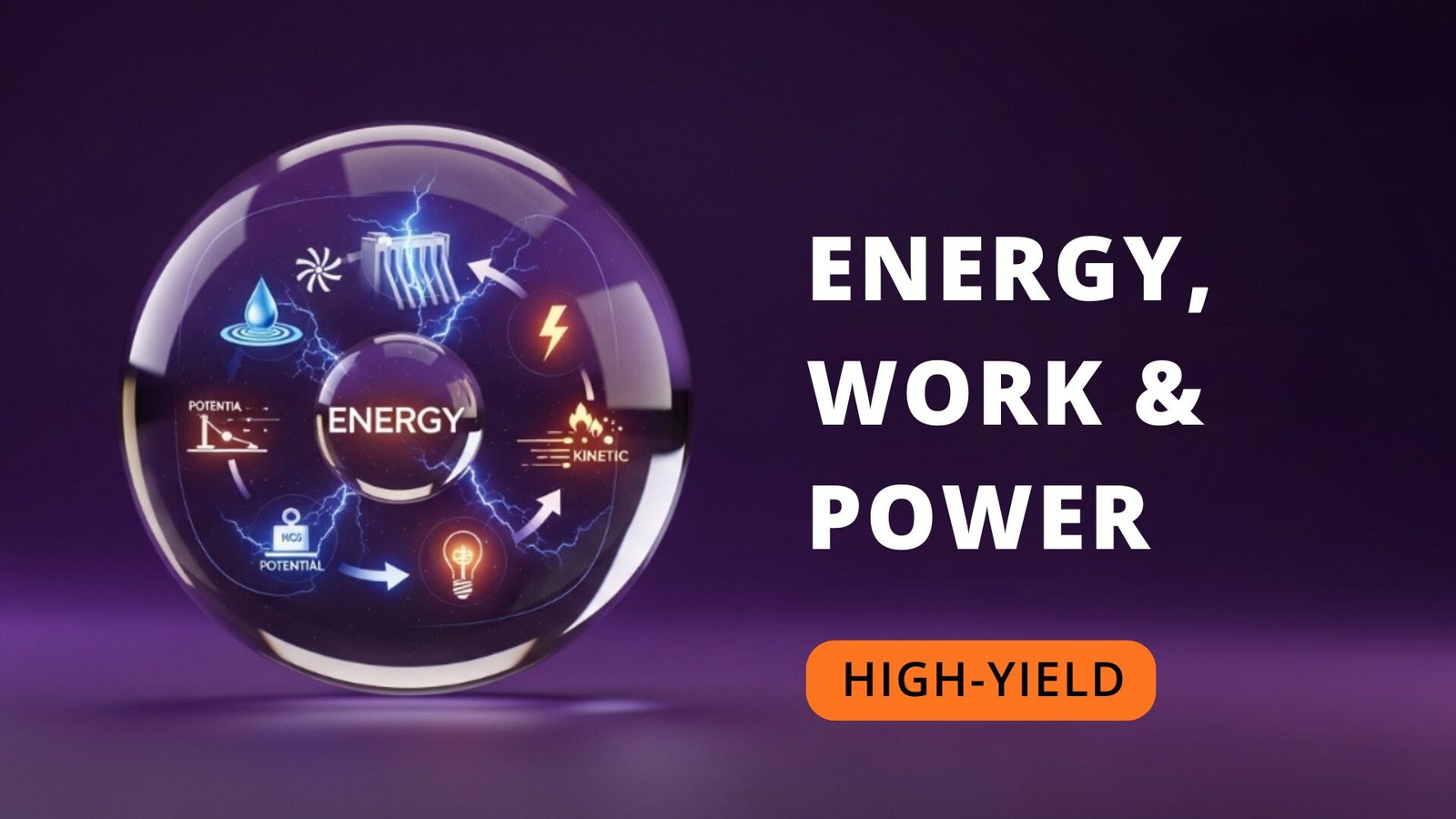
The Energy Types & Conservation (Core Physics) course gives learners a clear, exam-focused mastery of energy in IGCSE and O Level Physics—covering the major forms of energy, the key comparisons between gravitational potential energy and kinetic energy, and the central rule of physics: energy cannot be created or destroyed, only transferred and transformed. Learners will also build strong problem-solving ability in work, power, and the work–energy theorem—the exact skills needed to score consistently on structured and calculation questions.
Using structured explanations, multiple worked examples, exam tips, mnemonics, interactive quizzes, and high-quality LearnStalk explainer videos, learners will build fast recall, correct scientific vocabulary, and mark-scheme-ready reasoning. Whether you’re revising for mocks, preparing for finals, or strengthening your foundations for advanced physics topics, this course guides you step by step from core concepts to exam confidence.
What You Will Learn
- Identify and describe the major types of energy (potential, kinetic, electrical, thermal, chemical, nuclear, radiant/light, sound) using correct definitions and examples.
- Calculate gravitational potential energy using GPE = mgh and explain how height, mass, and gravity affect stored energy.
- Calculate kinetic energy using KE = ½mv² and explain why speed has a bigger impact than mass (because of v²).
- Distinguish clearly between potential energy vs kinetic energy and apply the comparison to common exam scenarios (falling objects, slopes, roller coasters, pendulums).
- Apply the law of conservation of energy to explain energy transfers in ideal and real systems, including losses due to friction and air resistance.
- Calculate work done using W = Fd and connect work directly to energy transfer in physical processes.
- Calculate power using P = W/t and P = E/t, and interpret what power means in real-life performance.
- Use the work–energy theorem to link net work to changes in kinetic energy: W(net) = ΔKE, and solve exam-style motion questions.
- Write correct energy transformation chains for everyday systems (hydroelectric dams, engines, bulbs, kettles, speakers, braking systems, solar panels) including useful vs wasted energy outputs.
- Solve mixed exam problems by choosing the correct formulas, showing clean working, and avoiding common traps in units, squared terms, and loss statements.
Why This Course Matters
Many learners lose marks in energy questions not because the topic is hard, but because they confuse work vs energy vs power, forget how to set up conservation equations, or fail to mention energy losses in real systems. In IGCSE/O Level exams, energy questions regularly test your ability to explain transfers, write transformation chains, and calculate using standard formulas. This course solves that problem by giving you a connected map of energy concepts and a reliable exam method—so your answers become accurate, fast, and confident.
Course Features
- High-quality LearnStalk explainer videos aligned to IGCSE/O Level outcomes
- Interactive quizzes and exam-style MCQs to strengthen calculation and application
- Rich concept explanations with worked examples and mark-scheme phrasing
- Exam tips & mnemonics to improve recall and avoid common errors
- Audio recaps for fast revision and reinforcement
- Flashcards for rapid recall of formulas, units, and key definitions
- Discussion prompts to correct misconceptions and strengthen exam technique
Who Is This Course For?
- IGCSE and O Level learners aiming for A–C grades through stronger understanding and exam practice.
- Students who struggle with energy transfers, formulas, and mixed calculations (GPE, KE, work, power).
- Learners who want a revision-friendly course with quizzes, flashcards, and audio recaps.
- Any student preparing for mocks, finals, or entry into more advanced physics topics.
Course Price
$15 – Full Access
Learn energy like an examiner—master the definitions, write correct energy chains, solve calculation questions confidently, and avoid the common traps that cost marks in IGCSE/O Level Physics.
Curriculum
- 1 Section
- 6 Lessons
- 3 Hours
You May Like

Crypto & Digital Assets for Beginners
Crypto & Digital Assets for Beginners” is a step‑by‑step course designed for complete newcomers to the world of cryptocurrency. You’ll learn how blockchain works, how...

Email Marketing for Complete Beginners
Customer Service Excellence is a practical course designed to help you communicate clearly, resolve issues faster, and turn unhappy customers into loyal fans. You’ll learn...

Customer Service Excellence
Customer Service Excellence is a practical course designed to help you communicate clearly, resolve issues faster, and turn unhappy customers into loyal fans. You’ll learn...

The Confidence Accelerator
The Confidence Accelerator is a step‑by‑step course that helps you transform self‑doubt into clear, calm confidence. Through practical lessons, reflection exercises, and real‑world challenges, you’ll...

How to Start an Online Store (Ecommerce Beginner to Pro)
Learn how to start an online store from zero and turn it into a professional ecommerce business. In this beginner‑to‑pro course, you’ll discover how to...
Course Features
- Lectures 6
- Quiz 0
- Duration 3 hours
- Skill level Beginner
- Language English
- Students 4837
- Certificate Yes
- Assessments Yes
"This course offers a clear and practical understanding of energy types and conservation principles. The lessons are easy to follow, with real-world examples that make core physics concepts accessible to everyone. Highly recommended for students seeking a solid foundation in physics!"