
Measurement & Scientific Skills
Build a strong foundation in scientific measurement and skills. This course guides you through units, significant figures, data collection, error analysis, and interpreting graphs using clear explanations and hands‑on examples so you can plan and analyze experiments with confidence.

Overview
Course Overview
The Measurement & Scientific Skills (Math Applied to Science) course gives learners a clear, exam-focused mastery of the measurement and numerical skills required in IGCSE and O Level Science. It trains students to read instruments accurately, write numbers in standard form, round correctly, use significant figures, apply units properly, solve real-life measurement problems, and reduce experimental errors—so their answers are both scientifically correct and mark-scheme ready.
Using structured explanations, step-by-step worked examples, exam tips, common mistake warnings, and high-quality LearnStalk explainer videos, learners will develop speed, accuracy, and confidence in calculations and practical-style questions. Whether you struggle with units, rounding rules, or interpreting measurement readings in Physics, Chemistry, and Biology, this course is designed to strengthen your foundation and boost your exam performance.
What You Will Learn
- Read common lab and physics instruments accurately, including rulers, measuring cylinders, thermometers, stopwatches, ammeters, and voltmeters, while avoiding parallax and scale-reading errors.
- Perform calculations using standard form, including multiplication/division with powers of 10 and correct scientific notation writing.
- Apply approximation and rounding rules correctly to match exam requirements and prevent unnecessary loss of marks.
- Use significant figures consistently in calculations, tables, and final answers, including understanding why sig. figs matter in scientific reporting.
- Solve real-life measurement problems involving speed, density, volume, gradients, averages, and practical experiment data interpretation.
- Use units correctly, including SI units, conversions (cm to m, g to kg, cm³ to m³), and writing derived units such as m s⁻¹ and kg m⁻³.
- Reduce experimental errors by applying repeat readings, mean calculations, zero correction, parallax reduction, improved method design, and uncertainty thinking—exactly as expected in IGCSE/O Level practical questions.
Why This Course Matters
In IGCSE and O Level Science, marks are frequently lost due to small but costly mistakes: misreading a scale, using the wrong unit, rounding incorrectly, giving answers in the wrong form, or failing to describe how to improve an experiment. This course prevents that by training you to think and write like an examiner expects: correct method, correct working, correct presentation. The outcome is not just “understanding”—it is higher accuracy, fewer avoidable errors, and stronger practical exam confidence.
Course Features
- High-quality LearnStalk explainer videos built for exam clarity
- Interactive quizzes that target common examiner traps
- Worked examples with full method marks thinking (not shortcuts only)
- Exam tips and common mistake warnings in every lesson
- Audio recaps for revision and reinforcement
- Flashcards to boost memory and fast recall under exam pressure
- Discussion prompts to help learners explain, compare methods, and build confidence
- Practice-driven approach that links measurement skills to real exam-style questions
Who Is This Course For?
- IGCSE and O Level students who want to improve accuracy, calculations, and practical exam performance.
- Learners who lose marks due to units, rounding, significant figures, or instrument-reading mistakes.
- Students preparing for Physics, Chemistry, and Biology who want a strong measurement + math foundation.
- Any learner aiming to become faster and more confident in data handling and scientific presentation.
Course Price
$11 – Full Access
Curriculum
- 1 Section
- 7 Lessons
- 3 Hours
You May Like
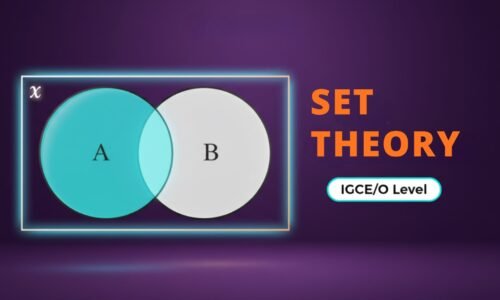
Sets & Venn Diagrams (Essential Course)
Build a solid foundation in sets and Venn diagrams with this essential course. You’ll learn key concepts, notations, and problem-solving techniques through clear lessons and...
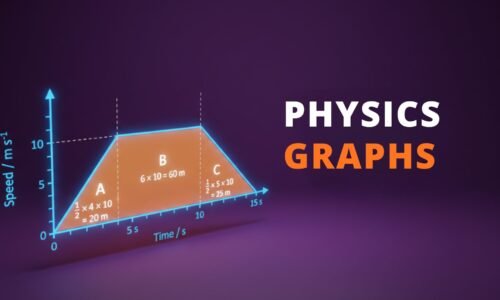
Graphs in Physics (Applied Skills Module)
This applied skills module focuses on one of the most powerful tools in physics: graphs. You’ll learn how to read, interpret, and construct graphs for...

Measurement of Density & Relative Density
Measurement of Density & Relative Density is a focused course that shows you exactly how to measure and use density and relative density in real...

Scalar & Vector Quantities (Vector Mastery)
Scalar & Vector Quantities (Vector Mastery) is a concise, beginner‑friendly course that explains the difference between scalar and vector quantities using clear definitions, diagrams, and...

Course Features
- Lectures 7
- Quiz 0
- Duration 3 hours
- Skill level All levels
- Language English
- Students 1311
- Certificate Yes
- Assessments Yes
“Measurement & Scientific Skills is a clear, practical course that makes core science concepts easy to understand. The step‑by‑step lessons, real‑life examples, and engaging activities helped me finally master units, significant figures, and data analysis. I now feel confident designing experiments, recording accurate results, and interpreting graphs like a real scientist.”